Entry · Ref MURBHJ13
Websites for Contractors: The Must-Have Features That Help Generate More Inbound Leads
- Posted
- 2026-10-14
- Last amended
- 2026-10-14
- Account
- @poolbuilderguide615
A contractor’s website does not need to be flashy to perform well. It needs to do something much harder, it needs to turn a stressed homeowner or property manager into a real inquiry. That usually happens in a small window of time, often on a phone, often between other tasks, and often when the person already has three other companies open in separate tabs.
That reality shapes good contractor website design more than any trend ever will.
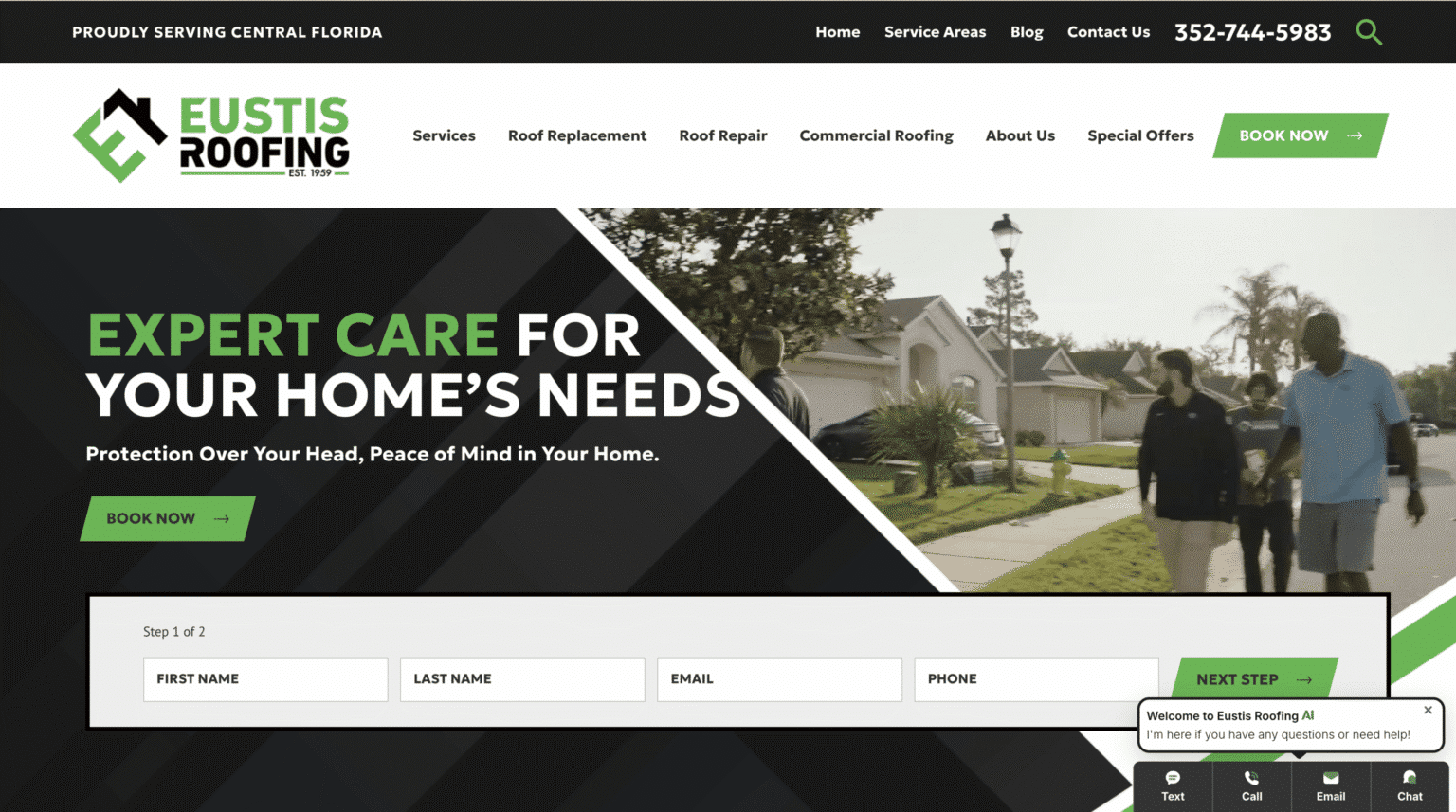
When I look at websites for contractors that actually help bring in calls and quote requests, the pattern is simple. They make it easy to understand what the company does, where it works, and how to get in touch right now. They load quickly. They show proof that the business is legitimate. They remove friction instead of adding it.
A lot of businesses in the trades are still sold on the wrong idea of what a site is supposed to do. They get a homepage that looks polished, but buries the phone number, uses vague headlines, and sends visitors through too many clicks before they can ask for help. That hurts lead flow, especially in home service website design, where urgency matters.
Whether you are investing in roofing website design, HVAC website design, plumbing website design, or electrician website design, the same question should guide every decision: does this page make it easier for a local prospect to contact you?
The homepage has one job
The best-performing homepages for service businesses do not try to say everything. They answer the first questions a prospect has within seconds.
What do you do? Where do you do it? How do I reach you?
Google has long emphasized that businesses should keep key information above the fold and make it easy for visitors to contact them quickly. That advice is especially relevant for website design for contractors because many visitors arrive with immediate intent. They are not browsing for fun. They are comparing options, checking service areas, and deciding who seems easiest to trust.
A strong contractor homepage usually puts the service category, service area, and contact path near the top. If someone lands on the page and has to hunt for a number, dig into a menu, or scroll through a giant banner before finding anything useful, you are making the lead work too hard.
This matters even more for mobile users. Google’s guidance is clear that many searches happen on phones, and responsive design is important. Contractors feel that every day in the real world. A homeowner standing in a hot house, under a leaking roof, or next to a dead panel is not looking for an elaborate desktop experience. They want a fast, readable mobile page with obvious next steps.
Mobile-first is not optional anymore
A surprising number of contractor sites still treat mobile as the secondary version. You can usually spot it quickly. Text runs too wide, buttons sit too close together, images dominate the first screen, and forms feel annoying to complete on a phone.
That is a problem on both the user side and the search side.
Google’s mobile guidance says slow pages lose visitors, and actions should take as few steps as possible. Its indexing guidance also warns that mobile pages that are hard to crawl, slow, or inconsistent can hurt visibility under mobile-first indexing. So mobile performance is not a cosmetic issue. It affects lead generation and discoverability at the same time.
Good contractor web design starts by assuming the first visit is mobile. The phone number should be ScalableWebsites tappable. The quote request button should be visible without scrolling forever. Service pages should be easy to skim with a thumb. The menu should not feel like a maze. If you ask for a form fill, the form should be short enough that a person can complete it from a driveway or jobsite.
I have seen businesses lose leads because the desktop site looked good in a boardroom presentation while the mobile site buried the contact button under oversized imagery. That kind of mistake is common in contractor website design because teams often approve a layout on a laptop, while the customer meets it on a cracked iPhone screen with one bar of signal.
Speed changes behavior
People talk about speed as a technical metric, but for contractors it is really a trust metric.
A slow site feels neglected. It creates hesitation before your company has even had a chance to make its case. If a page stalls, the visitor does not wait patiently and admire the branding. They back out and call the next contractor.
Google explicitly notes that mobile pages should load fast. That sounds basic, but it has practical consequences for lead generation websites for contractors. Large image files, bloated animations, auto-playing media, and intrusive pop-ups can all drag the experience down. Google also advises businesses to avoid heavy pop-ups, which is sensible for service sites where the user often has a narrow goal and little patience.
Project photos still matter, and I would argue they matter a lot, but they need to be used carefully. Real job images, team photos, truck shots, and before-and-after galleries build confidence, particularly in trades where visible workmanship matters. Google’s Local Services guidance also supports the use of photos and reviews for service businesses. The key is balance. Show real work, but do not let giant image files choke the page.
Clear calls to action outperform clever ones
Contractors do not need witty button copy. They need clear pathways.
If the prospect wants to call, make calling simple. If they want to send a message after hours, make messaging simple. If they want to request a quote, the form should be brief and obvious. Google’s documentation around business communication tools supports messaging as a mobile-friendly way for customers to start conversations, and Google Local Services notes that enabling messaging or booking can increase the likelihood of receiving leads when the phone is not answered.
That last part matters more than many owners realize.
Missed calls happen. Crews are on ladders. Techs are in attics. Owners are driving between jobs. A website that supports more than one contact method gives prospects another path when the phone goes unanswered. That could mean a short quote form, a mobile-friendly message option, or both.
The best call to action setup is usually straightforward:
- a visible phone number
- a short contact or quote form
- a message option for people who prefer not to call
- clear service area information
- obvious hours or availability details
That list looks almost too simple, but simple is the point. Most leaks in contractor lead generation happen because the site complicates what should be obvious.
Service pages should match what customers actually search for
A common mistake in contractor website design is stuffing everything into one generic services page. It saves time up front, but it weakens both usability and relevance.
A better approach is to create individual pages for meaningful service categories, especially when the business offers distinct work types that customers recognize by name. A roofing company, an HVAC company, a plumbing company, and an electrical contractor all benefit from naming services clearly because prospects search with specific intent. Someone looking for AC repair is not thinking in broad company language. Someone searching for a water heater issue or panel upgrade is not looking for poetic brand messaging.
This is where local SEO for contractors overlaps with conversion strategy. Separate, well-written pages help a visitor confirm they are in the right place. They also give the business more relevant entry points from search, assuming the pages remain useful and not stuffed with repetitive text.
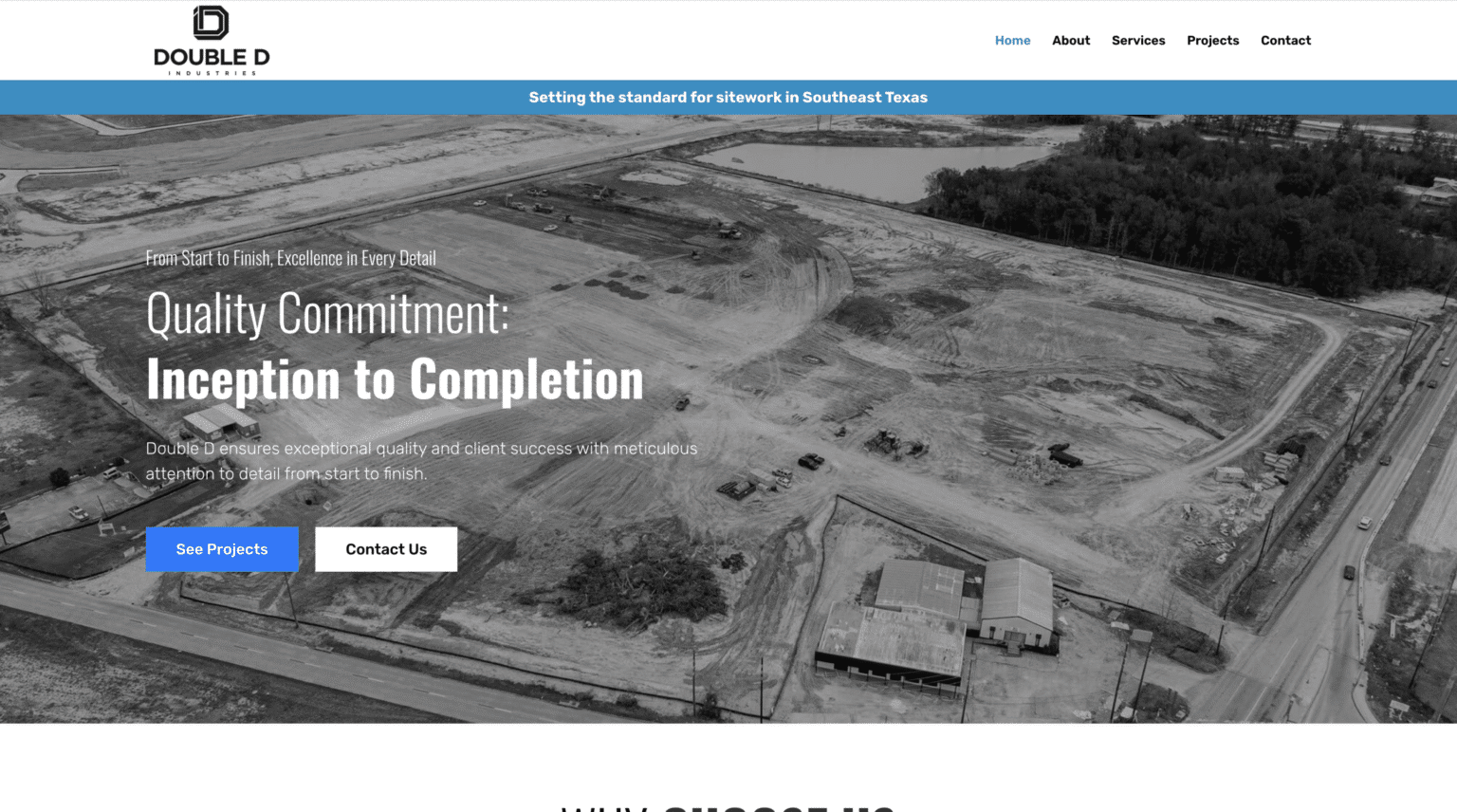
Good service pages usually explain the work in plain English, mention the service area naturally, and make it easy to take the next step. They do not need to read like textbooks. They do need enough specificity that a visitor can say, yes, this company handles my problem.
Local relevance needs to be unmistakable
For most trades, the lead only matters if it is in the right geography.
That seems obvious, but plenty of websites leave service area information vague. A contractor might serve one city, a cluster of suburbs, or a wider region. If the site does not make that clear, visitors hesitate. Some leave because they assume you do not work in their neighborhood. Others submit inquiries from areas you do not actually serve, wasting time for everyone involved.
Google Business Profile supports service-area businesses by letting them define service areas, choose the right category, and show their website on the profile. Those are foundational signals for local visibility. Your website should reinforce the same reality. If your profile says one thing and your website feels generic or unclear, you are creating avoidable confusion.
This is one of the quiet strengths of good website design for contractors. It aligns the website with the rest of the local search footprint. The category, service area, hours, and offered services should feel consistent across the business presence. That consistency helps users trust what they see, and it supports local SEO for contractors in practical ways.
Reviews and real photos do a lot of heavy lifting
Homeowners are letting strangers into their property. Commercial clients are trusting you with expensive systems, tight timelines, or both. Trust is not a decorative layer on a contractor site, it is the whole game.
Google encourages businesses to read and reply to reviews, and its business tools make reviews highly visible for service companies. Bringing that social proof onto the website helps reinforce what prospects may have already seen elsewhere. The strongest review placement is usually near decision points, not hidden on an isolated testimonials page that no one visits.
Real photos matter just as much. Google’s guidance around Local Services Ads includes photos, and that tracks with what works on contractor sites generally. Visitors want to see your actual work, your actual team, your actual trucks, or at least signs that a real operating business exists behind the logo.
Stock imagery has its place when necessary, but heavy reliance on generic smiling models tends to flatten credibility. In trades like roofing, HVAC, plumbing, and electrical, even a handful of clean, authentic project images often land better than a gallery full of polished but obviously staged stock shots.
Navigation should feel boring, and that is a compliment
Complicated navigation is usually a sign that the business organized the site around its internal preferences rather than the customer’s needs.
A contractor website should be easy to move through with almost no thought. People expect to find service pages, service areas, reviews, an about page, and a contact path. If the menu labels get too clever or the structure gets too deep, the site starts losing people who were ready to act.
Google recommends simple navigation, and that advice earns its keep here. The more urgent the need, the more damaging complexity becomes. A homeowner dealing with a no-cool call in summer is not going to poke through seven submenus. They will either contact you immediately or leave immediately. There is not much middle ground.
Simple navigation also helps teams manage their sites over time. When a contractor web design company builds a site with an elegant but confusing structure, future updates tend to make it worse. New pages get jammed in wherever there is room. Labels become inconsistent. Important pages disappear into dropdowns. A clean structure ages better.
Forms should ask less
Long forms are one of the easiest ways to suppress lead volume.
Google’s mobile guidance says forms and actions should take as few steps as possible. For contractors, that typically means asking only for the information needed to start the conversation. Name, contact details, service need, and perhaps location are often enough for a first inquiry. A site that asks for extensive project specifications before anyone has even spoken to the customer usually creates unnecessary drop-off.
This is especially true for emergency or semi-urgent services. People are less willing to complete a detailed questionnaire when the basement is wet or the breaker panel is acting up. They are looking for responsiveness, not paperwork.
There is a trade-off here. More questions can help qualify better leads. Fewer questions can increase submissions. The right balance depends on the business model, but most contractor sites lean too far toward collecting everything at once. If lead quality is poor, there are usually better ways to address that than forcing every visitor through a long intake form.
Messaging helps capture the leads that call alone misses
Phone calls are still central in home service website design, but they should not be the only lane.
Google’s communication guidance points to messaging or chat as a mobile-friendly way to start conversations. For contractors, that becomes especially valuable after hours, during lunch rushes, or anytime calls are missed. Some customers also simply prefer to send a message first. They may be at work, they may not want a callback immediately, or they may be contacting several companies and comparing response times.
Messaging does not replace the phone. It supplements it. The businesses that benefit most are often the ones that miss opportunities not because demand is low, but because availability is fragmented during the day. If your company cannot answer every call in real time, your website should give people another easy option.
That said, adding chat or messaging only helps if someone actually monitors it. A neglected message channel can frustrate users more than having no message option at all.
Your site should support your profile, not compete with it
Many leads begin on a profile rather than a homepage. A person sees a business in local results, checks the reviews, glances at hours and service area, then clicks through to the website. That means the site has to continue the conversation the profile started.
Google Business Profile and Local Services features emphasize categories, services offered, service area, hours, reviews, photos, and sometimes messaging or booking. Your site should echo those essentials clearly. If your profile says you handle certain services, the website should have useful pages for them. If your service area is defined one way on the profile, the website should not imply something totally different.
This is one of the most practical ideas in local SEO for contractors. Alignment improves trust. Mismatch creates doubt.
What to ask before hiring a contractor web design company
Not every contractor web design company understands the pace or buying behavior of trade businesses. Some are good at visual design but weak on lead flow. Others know search but produce sites that are difficult to update. The goal is not to find the fanciest team. It is to find a partner who understands service businesses and respects the basics that drive inquiries.
A few questions reveal a lot:
- How do you handle mobile-first design for service businesses?
- How do you keep contact actions simple and visible?
- How are service areas, services, reviews, and photos integrated into the site?
- What is included in ongoing updates, hosting, security, or support?
- How do you approach site speed and avoid bloated page design?
Even these questions are often enough to separate a polished sales pitch from a grounded process.
As one provider example in the market, Scalable Websites publicly describes itself as a Houston, Texas company offering monthly website subscriptions for home service contractors, including hosting, security, unlimited updates, and a dedicated project manager. That kind of support model may appeal to contractors who do not want a one-time build they have to babysit. It is not the only model, but it highlights an important point. Website ownership is not just about launch day. It is about how the site stays useful over time.
The truth about contractor website cost
Contractor website cost is one of those topics that gets messy fast because pricing structures vary so much. Some companies sell one-time builds. Others use ongoing monthly plans. Some bundle hosting, support, and updates. Others charge for every change.
Without reliable universal pricing data, the most honest way to think about cost is through scope and maintenance. A basic site with a few pages, clear calls to action, and responsive design will cost differently than a larger build with many service pages, service area coverage, messaging integrations, and ongoing support. A lower entry price can become expensive if every routine update turns into an extra invoice. A higher monthly price can be reasonable if it includes meaningful support that keeps the site fast, current, and aligned with your business.
The bigger risk is not paying too much. It is paying for the wrong things. Contractors rarely need excessive motion design, sprawling page counts, or clever interactions that do not improve lead flow. They do need speed, mobile usability, strong contact paths, local relevance, and easy maintenance.
The websites that win are usually the clearest
When a contractor site performs well, it usually does not feel mysterious. It feels easy. The company is identifiable. The services are clear. The geography is clear. The next step is clear. The page loads quickly, works on a phone, and gives the visitor enough trust signals to make contact.
That is what effective lead generation websites for contractors do.
Not every trade business needs the same layout, and not every service line deserves equal emphasis. Roofing website design may lean heavily on project imagery. HVAC website design may need to account for strong seasonal urgency. Plumbing website design often benefits from fast contact options because many issues feel immediate. Electrician website design may need to communicate both residential and higher-trust technical work with precision. Still, the fundamentals stay remarkably consistent.
If you strip away the fluff, the websites that generate more inbound leads are the ones that respect how people actually shop for contractors. They are fast. They are mobile-friendly. They are local. They are credible. Most of all, they make reaching out feel effortless.
About Scalable Websites
Scalable Websites builds professionally designed, AI-powered websites for roofers, HVAC companies, plumbers, electricians, remodelers and other home service contractors, with hosting, security, unlimited updates and lead capture included in one monthly plan.
396 Mallorn Lane, Montgomery, TX 77316
Phone: (832) 979-2478
Website: scalablewebsites.com
About Scalable Websites
Scalable Websites builds professionally designed, AI-powered websites for roofers, HVAC companies, plumbers, electricians, remodelers and other home service contractors, with hosting, security, unlimited updates and lead capture included in one monthly plan.
Houston, TX · Serving contractors nationwide
Phone: (832) 979-2478
Website: scalablewebsites.com